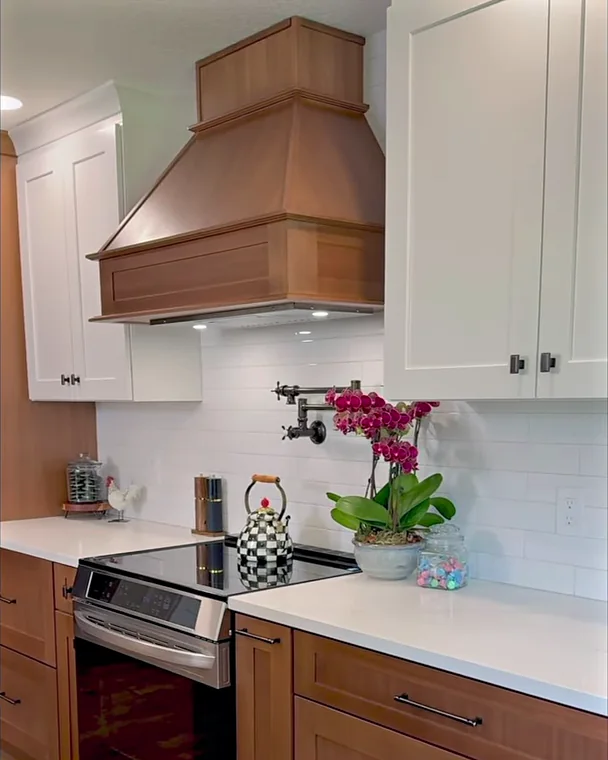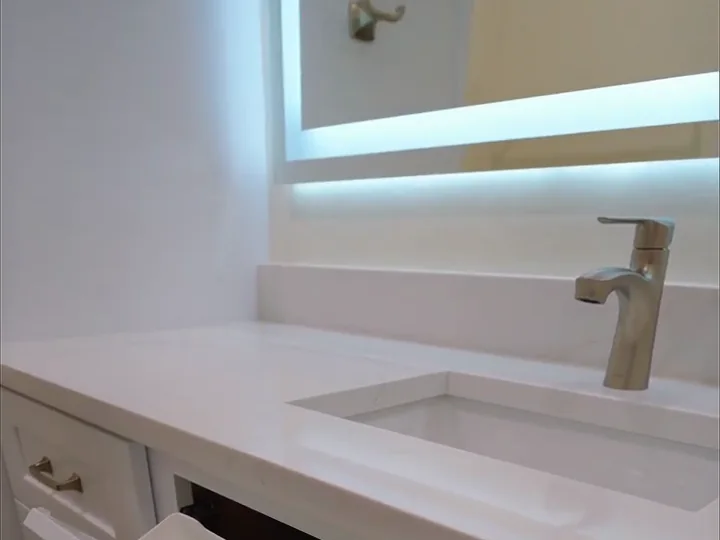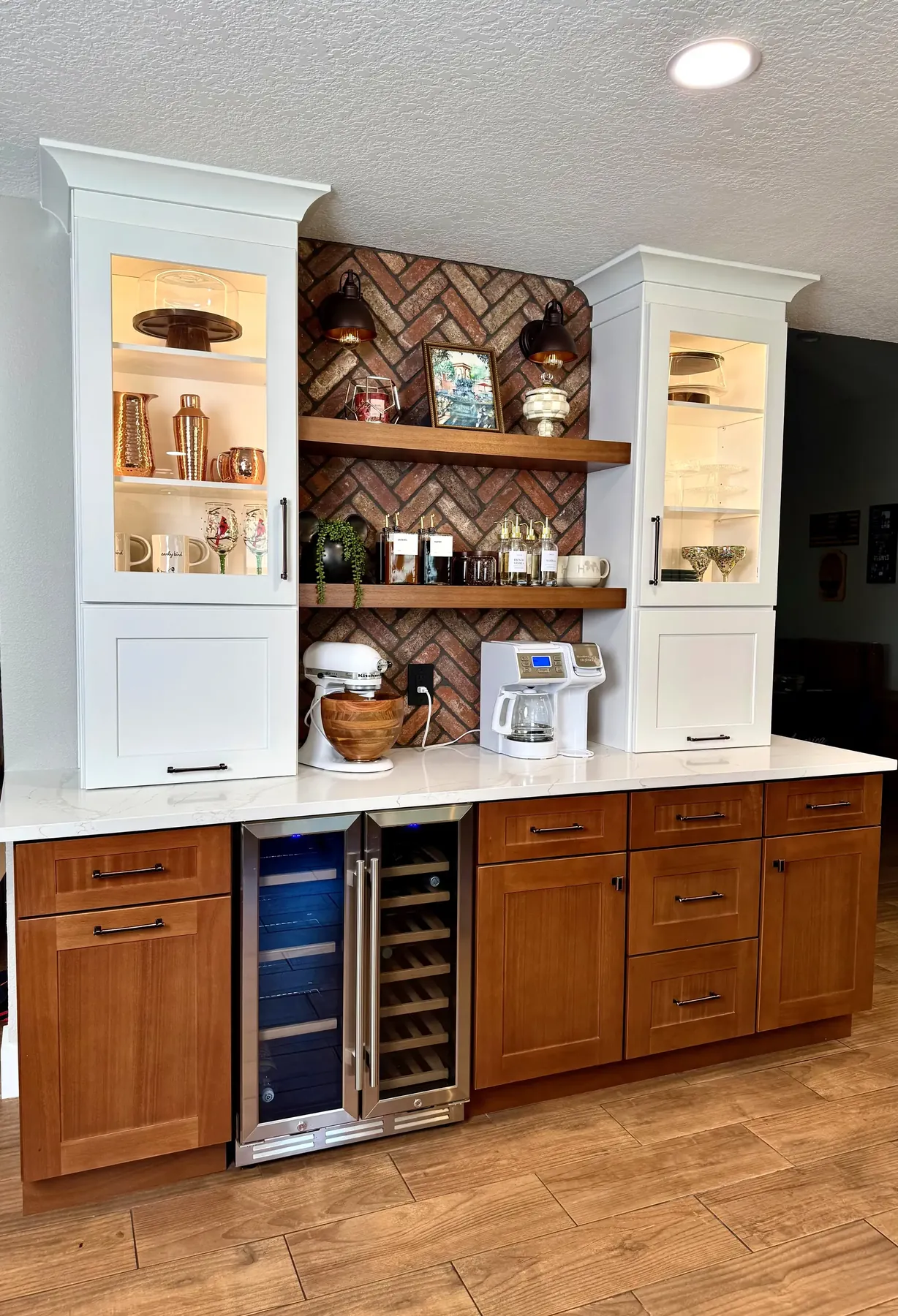
Choose quartz for the lowest upkeep, a uniform pattern and a marble look that survives daily life. Choose granite for heat tolerance, natural stone character, sunny rooms and outdoor kitchens. Fabrication and installation matter as much as the material.
Key facts
- Quartz is about 90% ground natural stone bound with resin; granite is 100% natural stone.
- Humidity is not a problem for either; some quartz pigments fade in years of direct sun, so outdoor kitchens should be granite.
- Solid surface is a third option that costs less than quartz.
When Central Florida homeowners start picking finishes, the quartz vs granite question comes up almost every time. Both are premium countertop surfaces, both last decades, and both add real value to a kitchen. The right choice comes down to maintenance, appearance, heat tolerance, and budget.
Below is a straight comparison based on what we install in Orlando-area kitchens every week: what each surface costs, how each holds up, and which one tends to make homeowners happier a few years down the road.
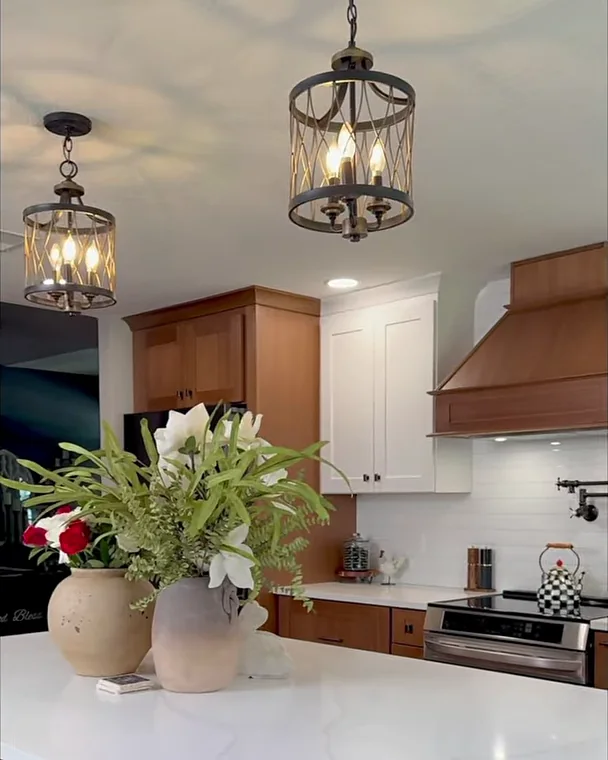
Quartz vs granite at a glance
If you only read one section, read this one. The table below sums up the practical differences most homeowners care about.
| Factor | Quartz | Granite |
|---|---|---|
| Material | Engineered: ground stone bound with resin | 100% natural stone, quarried in slabs |
| Industry installed range | $55–$120 per sq. ft. | $45–$110 per sq. ft. |
| Sealing | Never needs sealing | Reseal every 1–3 years |
| Stain resistance | Excellent (non-porous) | Good when sealed |
| Heat resistance | Moderate; always use a trivet | Excellent |
| Appearance | Consistent, predictable pattern | Unique veining, no two slabs alike |
| Best for | Busy families, low upkeep | Natural character, heavy cooking |
Quartz countertops: pros and cons
Quartz is engineered rather than quarried. Roughly 90% ground natural quartz is blended with resins and pigment, then pressed into slabs. That manufacturing step is what gives quartz its two biggest advantages: it is non-porous, and it looks the same on the slab as it will on your island.
Where quartz wins
- No sealing, ever. There is no annual maintenance task to forget.
- Stain resistance. Red wine, coffee, and tomato sauce wipe up without leaving a shadow.
- Predictable design. What you approve in the showroom is what lands in your kitchen.
- Consistent seams. Uniform patterning makes seams easier to hide on long runs.
- Marble looks without marble upkeep. The veined whites give a marble look that survives daily life.
Where quartz falls short
- Heat sensitivity. The resin binder can scorch or discolor under a hot pan, so trivets are not optional.
- Direct sun. Some quartz colors can fade over years in a bright window or sunroom.
- Price at the top end. Designer patterns can cost more than mid-grade granite.
Granite countertops: pros and cons
Granite is cut straight from the quarry and polished. Every slab carries its own movement, mineral flecks, and color depth. For homeowners who want the counter to be a feature rather than a backdrop, that character is hard to replicate.
Where granite wins
- Heat tolerance. A hot pan straight off the burner will not damage a granite top.
- One-of-a-kind look. No two slabs match, which appeals to a lot of buyers.
- Value at the entry level. Builder-grade granite is often the most affordable stone option.
- Scratch resistance. It stands up well to everyday knife and cookware contact.
Where granite falls short
- It needs sealing. Plan on resealing every one to three years to keep it stain-resistant. Once you have picked the stone, the finish matters too: see our guide to polished, honed and leathered granite.
- Porosity. Left unsealed, oil and wine can soak in and leave a permanent mark.
- Slab shopping required. You should approve the actual slab, since a sample will not show the movement.
What quartz vs granite costs in Central Florida
Countertops are usually the second-largest line item in a kitchen remodel after cabinets. A typical Orlando-area kitchen uses 40 to 55 square feet of surface, including the island.
| Kitchen size | Quartz, industry range | Granite, industry range |
|---|---|---|
| Small (30 sq. ft.) | $1,650 – $3,600 | $1,350 – $3,300 |
| Average (45 sq. ft.) | $2,475 – $5,400 | $2,025 – $4,950 |
| Large w/ island (65 sq. ft.) | $3,575 – $7,800 | $2,925 – $7,150 |
Industry line-item figures, not Posada quotes. Ranges reflect typical Central Florida projects in 2026. Your written proposal is exact.
Industry guides include fabrication, edge profile, cutouts and installation in those ranges, and add $200 to $500 to remove an old countertop. For where countertops fit in a full budget, see our Central Florida kitchen remodel cost guide.
Solid surface vs quartz: the third option most homeowners skip
Quartz and granite dominate the conversation, but there is a third material worth knowing about. Solid surface, the category Corian made famous, is a fully man-made sheet of acrylic or polyester resin blended with mineral filler. It is not stone, and it is not quartz.
The comparison people usually want is solid surface vs quartz, because the two look similar in a photo and behave very differently in a kitchen. Quartz is roughly 90% ground stone and is hard, heavy and cool to the touch. Solid surface is softer, warmer, and (this is its real trick) repairable.
| Factor | Solid surface | Quartz | Granite |
|---|---|---|---|
| Material | Acrylic or polyester resin with mineral filler | Ground stone bound with resin | Natural quarried stone |
| Industry installed range | $40 – $80 per sq. ft. | $55 – $120 per sq. ft. | $45 – $110 per sq. ft. |
| Seams | Bonded and sanded, effectively invisible | Visible but easy to hide with consistent patterning | Visible; slab movement makes matching harder |
| Scratches | Scratches more easily, but sands out | Highly scratch resistant | Highly scratch resistant |
| Heat resistance | Poor, the weakest of the three | Moderate; always use a trivet | Excellent |
| Sealing | Never | Never | Every 1–3 years |
| Integrated sink | Yes, sink and counter can be one seamless piece | No | No |
| Resale perception | Reads as a step below stone | Reads as premium | Reads as premium |
Where solid surface makes sense
- Long uninterrupted runs. Seams are chemically bonded and sanded flat, so a 12-foot counter can read as one continuous piece.
- Damage that can be undone. A scratch or a scorch mark can usually be sanded and buffed out on site. Quartz and granite cannot be repaired that way.
- Integrated sinks. A sink moulded into the counter with no rim is easy to wipe down and has nowhere for grime to collect.
- Bathrooms and laundry rooms. Lighter duty, less heat, and the seamless look pays off. It is a common choice on a bathroom remodel vanity.
- A tighter budget that still needs to look finished. It typically lands below both quartz and granite installed.
Where solid surface loses
- Heat. This is the deal-breaker in a kitchen. A hot pan can leave a permanent mark, and it is less forgiving than quartz.
- Softness. It marks up faster under everyday knives and cookware, even though the marks can be sanded out.
- Buyer perception. Listings say “quartz” and “granite” for a reason. Solid surface does not carry the same weight when you sell.
Our short version: for a kitchen where people actually cook, quartz or granite is the better buy, and solid surface is the value pick when seamlessness and repairability matter more than heat resistance. In a bathroom, the calculation flips and solid surface becomes genuinely competitive.
How Central Florida homes affect the choice
Local conditions matter more than most comparison articles admit. A few things we point out to Orlando-area homeowners:
- Humidity is not a problem for either. Both surfaces are dimensionally stable in Florida’s climate.
- Sunlight is. Kitchens with big west-facing windows or a pass-through to the lanai favor granite, since some quartz pigments fade with years of direct UV.
- Outdoor kitchens should be granite. We do not recommend quartz for any covered patio or summer kitchen. Heat and sun both work against it.
- Open-concept layouts favor quartz. When the island is visible from the living room, consistent patterning usually reads cleaner.
Which should you choose?
There is no wrong answer here, only a better fit. After years of installs, the pattern we see is simple.
- Choose quartz if you want the lowest possible upkeep, you have kids, you like a clean uniform look, or you are after a marble aesthetic that will survive real life.
- Choose granite if you cook heavily, you want natural stone character, you are building an outdoor kitchen, or you want stone on a tighter budget.
Either way, the fabrication and installation matter as much as the material. Clean seams, a well-matched edge profile, and proper support under an overhang are what separate a countertop that looks custom from one that looks close enough. Browse finished projects in our kitchen gallery to see both materials in real Central Florida homes.
Countertop FAQs: quartz, granite and solid surface
Is quartz or granite more expensive?
They overlap heavily. Entry-level granite is usually the cheapest stone option, while high-end designer quartz sits at the top of the range. Industry guides put quartz at about $55 to $120 per square foot installed and granite at about $45 to $110.
Which one adds more resale value?
Buyers respond well to both, and neither carries a clear premium over the other. What matters more is that the countertop is real stone or quartz rather than laminate, and that it suits the rest of the kitchen.
Does quartz stain?
Rarely. Quartz is non-porous, so spills sit on the surface instead of soaking in. Wipe up standing liquids and it will stay looking new without any sealing.
Can you put a hot pan on quartz?
No. The resin binder in quartz can scorch or discolor under direct heat, so always use a trivet. Granite handles hot cookware without issue.
How often does granite need to be sealed?
Every one to three years for most slabs. A quick test: drop a little water on the surface, and if it darkens within a few minutes, it is time to reseal.
Can I mix quartz and granite in one kitchen?
Yes, and it works well when it is intentional. A common approach is quartz on the perimeter runs with a granite island as a focal point.
Is solid surface the same as quartz?
No. Quartz is about 90% ground natural stone bound with resin, so it is hard, heavy and very scratch resistant. Solid surface is a man-made acrylic or polyester sheet with mineral filler. It is softer and less heat resistant, but its seams disappear and scratches can be sanded out.
Is solid surface cheaper than quartz?
Usually. Industry guides put solid surface at about $40 to $80 per square foot installed, against roughly $55 to $120 for quartz. The gap narrows on high-end solid surface colors.
Working with Posada
Posada Remodeling & Design serves homeowners across Orlando, Winter Park, Longwood, Ocoee, Windermere, Clermont, and Lake Mary. We are fully insured. Financing is available through Hearth (NMLS ID 1628533), which works with a network of lending partners, including 0% APR promotional options for qualified homeowners. Posada is not a lender; rates and terms are set by the lending partner. All work is completed to the Florida Building Code.
Bring us your slab questions. We talk through layout and budget at your complimentary in-home design consultation, and you can see samples in person at our Casselberry studio, by appointment. Learn more about our kitchen remodeling services, or talk to a designer about your project.