
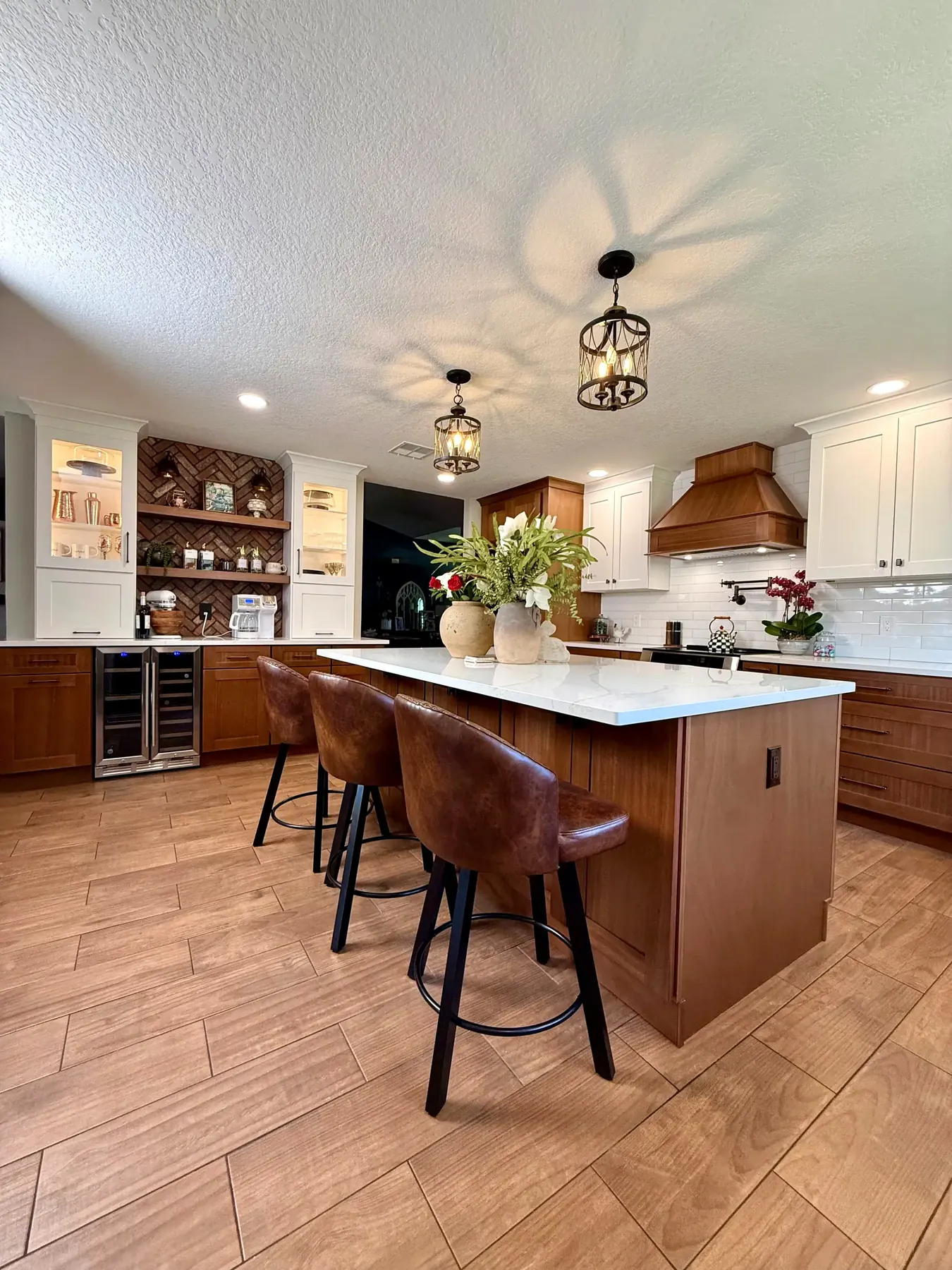
Kitchen remodeling in Orlando & Central Florida.
Custom cabinetry, quartz islands and a layout that finally works, priced line by line before you sign.
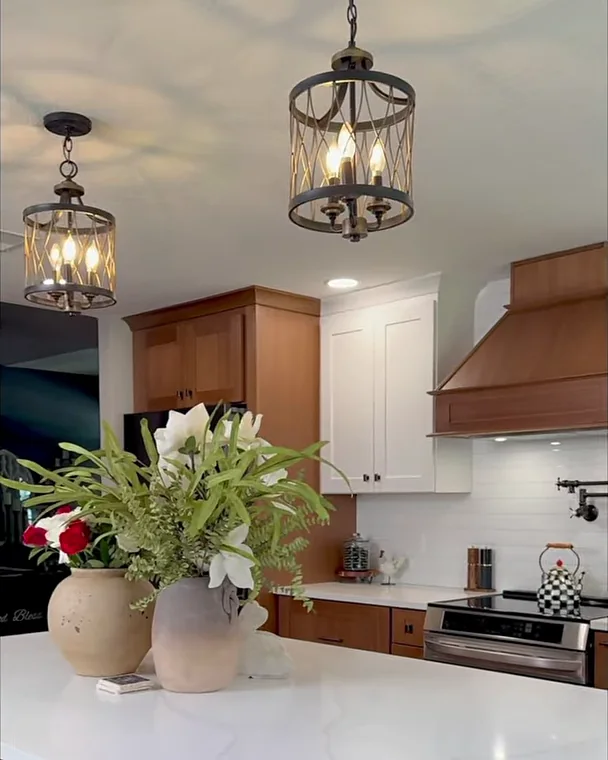
Designed, priced and built by one team.
Posada Remodeling & Design designs and builds kitchen remodels in Orlando and across Central Florida from its studio in Casselberry. A refresh and update typically runs $15,000 to $25,000, a full remodel $25,000 to $50,000, and a luxury or open-concept kitchen $50,000 to $80,000+. Ranges reflect typical Central Florida projects in 2026. Your written proposal is exact. Call or text (407) 319-3503 to book a complimentary in-home design consultation.
At Posada, the people who draw your kitchen are the people who price it and build it, so the finish you approve on paper is the finish you cook in.
Projects range from a cabinet-and-counter refresh to an open-concept kitchen with a new island, new lighting and new floors through the whole home.
- Custom and semi-custom cabinetry, classic overlay and premium inset
- Quartz and granite countertops with full-height backsplashes
- Islands, open-concept layouts and layout changes shown in renderings first
- Lighting plans: pendants, under-cabinet and recessed
- Custom wood range hoods, built for your kitchen
- In-stock framed and frameless cabinet collections
 Play · 8:07
Tour a finished kitchen in Winter Garden.
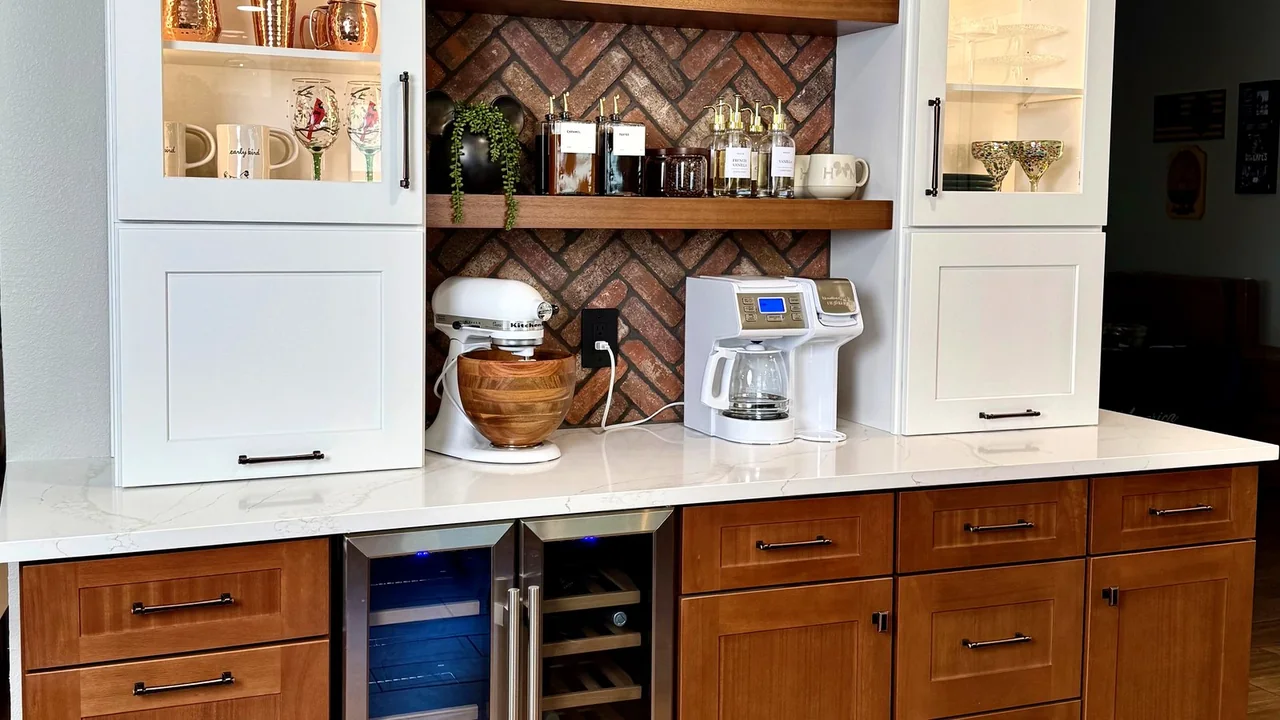
Walk through the kitchen on this page with Mike: the coffee bar, the pot filler over the range, the custom wood hood and the storage behind every door and drawer. A real Posada project, explained by the owner.
More films on YouTubeKitchens their owners still talk about.
on Google
“We chose Posada for our new floors and full kitchen remodel and we couldn’t be happier. Mike and his team are professional, hard workers, and very detail oriented. They were respectful to our home and went above and beyond to satisfy our vision. They always cleaned up at the end of the day.”
“Mike and his team did an excellent job remodeling our kitchen. His attention to detail and willingness to satisfy us were top notch. His recommendations and communication were excellent and timely. We felt heard when we made suggestions. We would hire him and his team again in an instant.”
“We couldn’t be happier with our kitchen remodel! From start to finish, the entire experience with Posada Remodeling was exceptional. The team was professional, reliable, and truly passionate about their work. They took the time to understand our vision and turned it into something even better.”
Built for the way you cook.
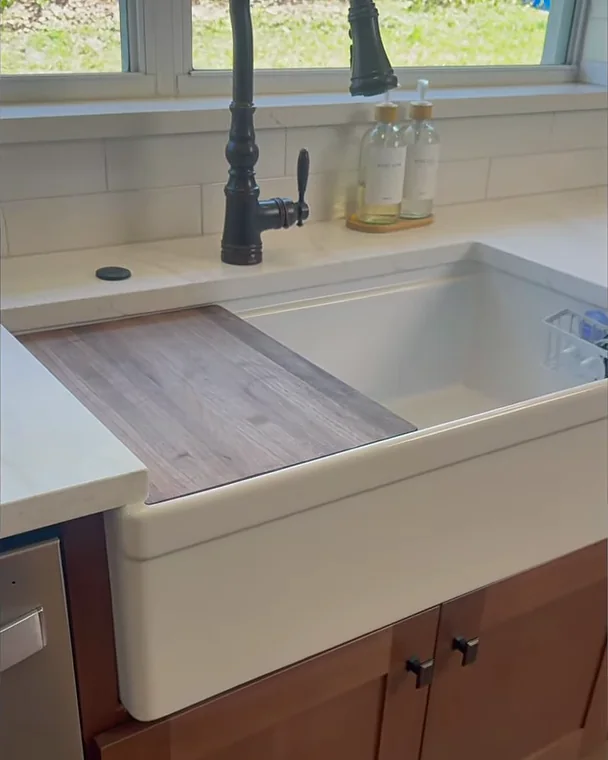
Three things Mike stops to show on the tour: a 36-inch workstation farm sink, a deep soft-close drawer for pots and pans, and a pot filler over the range.
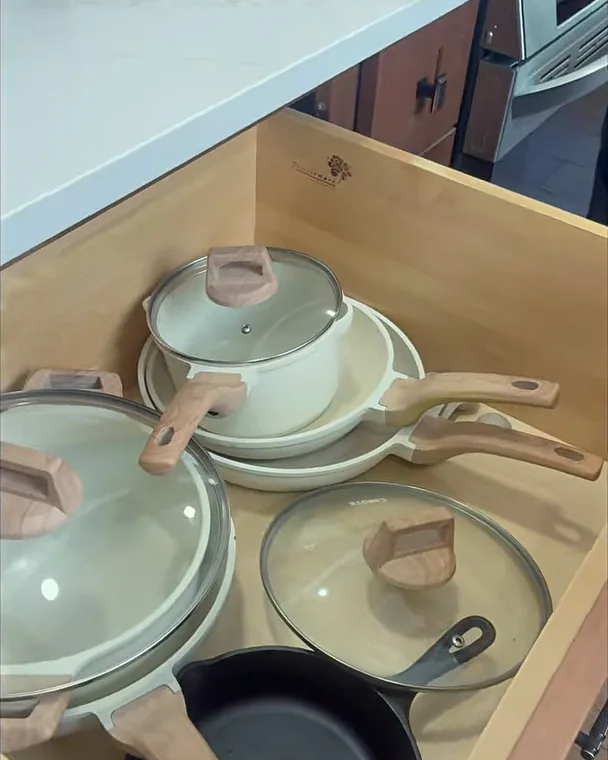
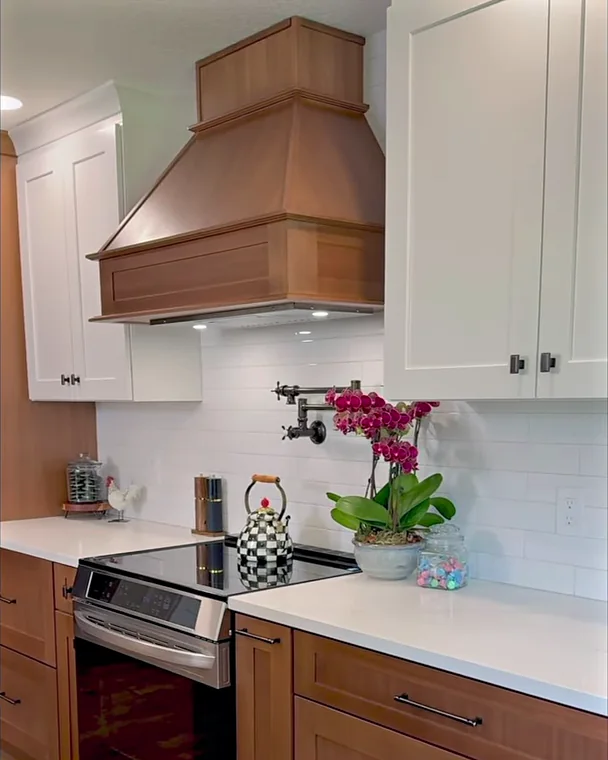
How much does a kitchen remodel cost in Orlando?
These are typical 2026 ranges from our own Central Florida kitchens, so you can plan with real numbers before anyone draws a line.
| Kitchens | Typical range |
|---|---|
| Refresh & update | $15,000 – $25,000 |
| Full remodel | $25,000 – $50,000 |
| Luxury & open-concept | $50,000 – $80,000+ |
Ranges reflect typical Central Florida projects in 2026. Your written proposal is exact, and we tell you which range you are in at the consultation. The full breakdown is in our 2026 kitchen remodel cost guide.
Planning several rooms at once? One team designs and builds kitchens, bathrooms and floors together, with every room itemized in your written proposal. How a combined project works.
Financing is available through Hearth (NMLS ID 1628533), which works with a network of lending partners, including 0% APR promotional options for qualified homeowners. Posada is not a lender; rates and terms are set by the lending partner. See how homeowners finance a kitchen remodel.
Six choices that set your range.
Two kitchens of the same size can land in different ranges. These are the decisions that move the number most, and your itemized proposal shows the cost of each one.
- Cabinetry grade: in-stock, semi-custom or fully custom, classic overlay or premium inset
- Countertop material: quartz or granite, slab size and edge profile
- Layout changes: moving plumbing, electrical or walls, or adding an island
- Size: linear feet of cabinetry and square feet of countertop
- Finish level: backsplash, lighting, hardware and a custom wood hood
- Structural or permit requirements, such as a load-bearing wall
Not sure where your kitchen lands? We tell you at the consultation, before any design work begins.
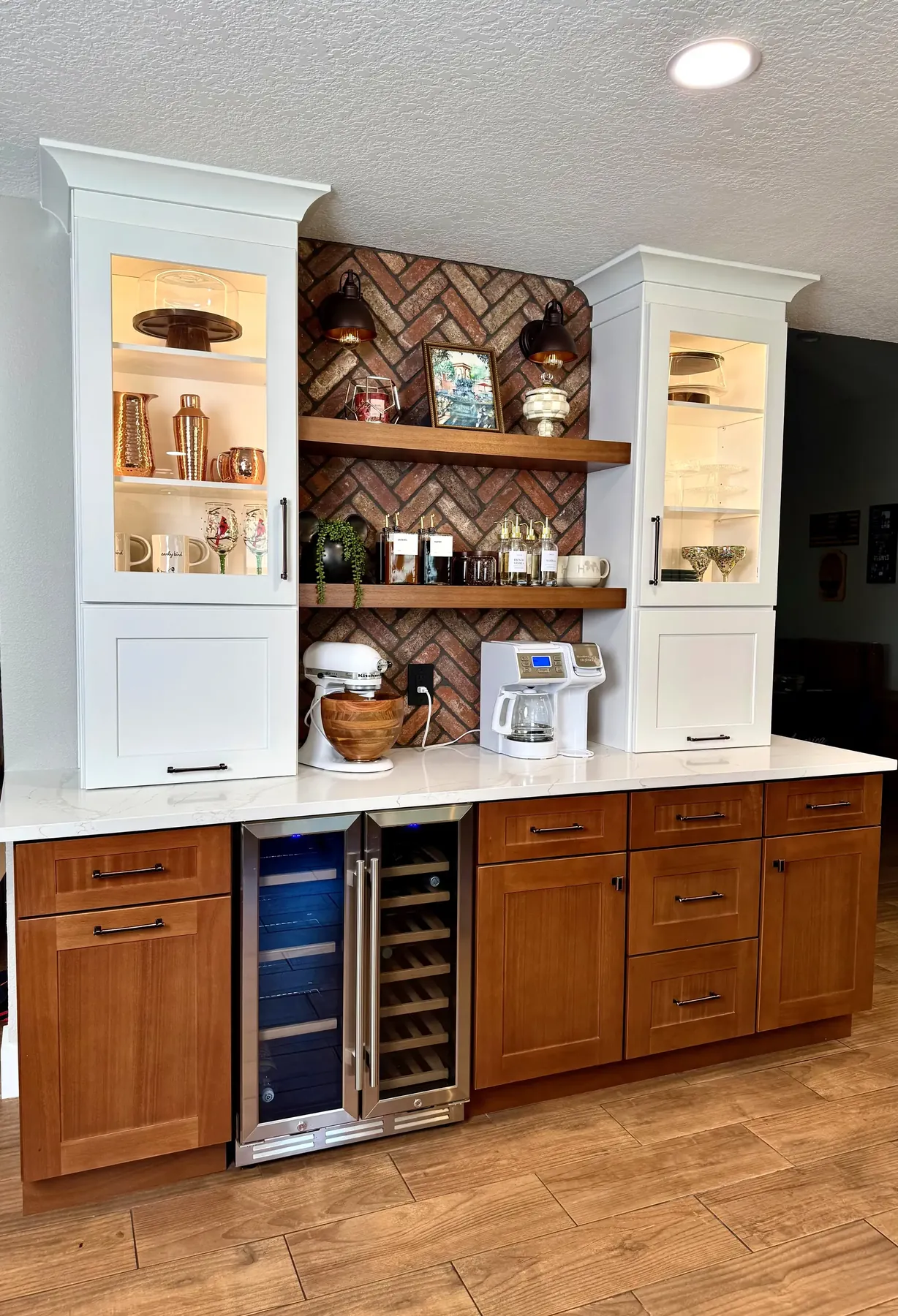
From in-stock cabinets to fully custom.
Cabinetry sets the tone of the room and most of the budget, so we offer three paths and tell you plainly where each one lands before you fall in love with a door style.
- Custom and semi-custom cabinetry in classic overlay and premium inset, built to your layout
- In-stock framed and frameless shaker collections in white, grey, pearl, blue, natural, onyx and cashmere
- Euro-style collections in glossy white and natural oak
- 1 to 2 week turnaround on in-stock collections
- Lifetime warranty on the cabinetry we install
Countertops, backsplash tile, hardware and lighting are chosen in the same sitting, at our Casselberry studio by appointment or at your home, so the whole kitchen is decided together. Comparing stone? Read quartz vs. granite and polished, honed or leathered granite.
Your kitchen, step by step.
You will always know what happens next, who is in your home, and what it costs.
Consultation
We meet in your kitchen, listen to how you cook and live, and tell you honestly which budget range your project falls into. Complimentary, with evening and weekend times available.
Itemized proposal
Line by line: labor, materials and timeline. Pick the upgrades you want and leave out anything you don’t, before you sign.
Design & renderings
Layout, cabinetry, counters and lighting, with renderings before anything is ordered.
Build
Your project manager, our own team, and a clean site at the end of every day. Permits included when your project needs one; we coordinate it through our licensed general contractor partner.
Walkthrough & warranty
A final walkthrough with every detail checked, a three-year labor and installation warranty in writing, and a follow-up from Mike to make sure you love it.
Before you call.
How much does a kitchen remodel cost in Orlando?
Most Posada kitchens fall into three ranges: a refresh and update at $15,000 to $25,000, a full remodel at $25,000 to $50,000, and a luxury or open-concept kitchen at $50,000 to $80,000 and up. Ranges reflect typical Central Florida projects in 2026. Your written proposal is exact, and we tell you which range you are in at the consultation, before any design work begins.
How long does a kitchen remodel take?
Industry guides put a midrange kitchen remodel at roughly four to eight weeks of construction, and a full remodel with layout changes at eight to twelve weeks or more. Custom cabinetry and countertop fabrication add lead time before work starts, while our in-stock cabinet collections turn around in one to two weeks. Your schedule is set once your selections are final and written into the proposal. Our guide to how long a remodel takes has the full timeline.
Can we keep our current layout?
Yes, and it is often the smartest place to start. Keeping plumbing, electrical and walls where they are puts more of the budget into cabinetry, counters and lighting, and in Orange County replacing cabinets and countertops in the same layout does not require a permit. If moving a wall or adding an island is what the room needs, we show it in renderings first. Permits included when your project needs one; we coordinate it through our licensed general contractor partner.
Do you offer in-stock cabinets for a faster remodel?
Yes. Our in-stock framed and frameless collections include shaker doors in white, grey, pearl, blue, natural, onyx and cashmere, and euro-style doors in glossy white and natural oak, with a one to two week turnaround. They carry the same lifetime warranty as every cabinet we install and suit a refresh or a full remodel on a tighter schedule. Semi-custom and custom cabinetry remain available when the design calls for it.
Is $10,000 enough for a kitchen remodel?
Usually not for a full kitchen. Our refresh and update range starts at $15,000, so $10,000 typically covers a smaller scope than new cabinetry, counters and lighting throughout. At the complimentary consultation we tell you honestly what your budget covers, and every line is itemized in your written proposal. Ranges reflect typical Central Florida projects in 2026. Your written proposal is exact.
Is $30,000 enough for a kitchen remodel?
For many kitchens, yes. $30,000 sits inside our full-remodel range of $25,000 to $50,000, where a same-layout 10x10 kitchen usually lands. Moving walls or plumbing, fully custom cabinetry or a larger room push the number higher. Ranges reflect typical Central Florida projects in 2026. Your written proposal is exact, and we tell you which range your kitchen falls into at the consultation.
Do I need a permit to remodel a kitchen in Florida?
Only for some work. Rules vary by jurisdiction: in Orange County, for example, replacing cabinets and countertops in the same layout does not need a permit, while moving plumbing, electrical or walls does, and structural changes such as removing a load-bearing wall need one too. Permits included when your project needs one; we coordinate it through our licensed general contractor partner. Our Florida remodel permit guide covers the details.
Can we live at home during a kitchen remodel?
Most families do. The kitchen is out of service while the work happens, so at the consultation we walk through what to expect and the order of work. Many homeowners set up a temporary kitchen with a microwave, a refrigerator and sink access elsewhere in the house. Our own team works in your home, with a clean site at the end of every day.
Who will be in my home during a kitchen remodel?
Our own team. Mike Posada, the owner, personally oversees every project, and your project manager is your one point of contact on site. Meet the team, including project manager Josh Castillo and interior design advisor Yani Tejera, on our About page. Mike follows up after completion to make sure you are happy with the work.
Kitchen remodeling across Central Florida.
Kitchen design and remodeling across Orange, Seminole, Osceola, Lake and Volusia counties, from our studio in Casselberry. Design consultations in Winter Garden, by appointment.
Planning the bathrooms too? See bathroom remodeling, or meet the team on our About page.
All service areas- Kitchen remodeling in WindermereOrange
- Kitchen remodeling in Winter GardenOrange
- Kitchen remodeling in Winter ParkOrange
- Kitchen remodeling in Altamonte SpringsSeminole
- Kitchen remodeling in CasselberrySeminole
- Kitchen remodeling in Lake MarySeminole
- Kitchen remodeling in LongwoodSeminole
- Kitchen remodeling in OviedoSeminole
- Kitchen remodeling in SanfordSeminole
Tell us about your kitchen.
A complimentary in-home design consultation. We listen first, then tell you honestly which range your kitchen falls into. No obligation, and we never share your information.